FgMDM
Minimum Distance to the Mean (MDM)
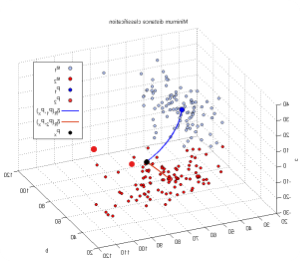
Fig 5: minimum distance to the mean example
The method is based on the use of Riemannian Distance and Geometric mean to classify covariance matrices.
P_1 = G(P_i \rarr\omega_i = 1),
P_2 = G(P_i \rarr\omega_i = 2),
For a given matrix P_x of unknown class:
\Omega_x: \omega_x = \argmin_i( \delta_R(P_x, P_i)) \ \ \ (8)
Method
FgMDM projects training matrices Pi onto the tangent space at point P (the mean of all training data) using (4) to obtain matrices S_i. Then, a Fisher geodesic filter is obtained by optimizing an LDA classifier on S_i^{vec}, the vectorized upper-triangular elements of S_i, to discriminate classes using such vectors. This results in a matrix of weights W=LDA(S_i^{vec}).
The projected SPD matrices Si from both the training and the testing sets are then filtered with weights W, using S_i=W(W^TW)^{−1}WTS_i^{vec}, where S_i denotes the geodesic filtered SPD matrices from S_i. These filtered matrices S_i are then projected back onto the manifold using
P_i=\exp_P(S_i)=P^\frac{1}{2}\exp_k(P^{-\frac{1}{2}}S_iP^{-\frac{1}{2}})P^\frac{1}{2} \ \ \ (9)
where P_i are the filtered SPD matrices projected onto the manifold and exp_k(M) denotes the exponential of matrix M. Finally, this approach uses a minimum distance to the mean classifier to classify testing geodesic filtered matrices P_i. To do so, during the training step, the class centroids P_k of each class k are computed by averaging the geodesic filtered covariance matrices P_k from each class k.
During testing, the Riemannian distances between the testing geodesic filtered matrix P_j and each class centroid P_k are first calculated by using (3). The matrix P_j is assigned class label k for which the centroid P_{jk} is the nearest. FgMDM was applied on EEG bandpass filtered in 8–12 Hz, as for the CSP