1-$sigma$ reproducibility
1-sigma reproducibility
Reproducibility is a measure of the variation when multiple people repeatedly measure the same item, using the same measurement device and method. Reproducibility would be the amount of observed variation attributable to between person variation. The graphic below shows what good and poor reproducibility would look like.
Reproducibility is important, because it describes the variation in your measurement system attributable to person to person variation. If you have multiple people taking multiple measurements of the same object, you would want the variation between them to be very small, meaning a high reproducibility for your measurement system.[1]
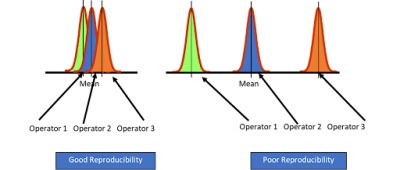
Fig 1 : Example of good reproducibility on the left
Sigma rule in standard deviation
One standard deviation, or one sigma, plotted above or below the average value on that normal distribution curve, would define a region that includes 68 percent of all the data points. Two sigmas above or below would include about 95 percent of the data, and three sigmas would include 99.7 percent. [2]
Further Reading: Compared to the Repeatability
Repeatability is a measurement of the variation when one person repeatedly measures the same item, using the same measurement device and method. If the measurement device, whether it be a gage, scale, or even a human is consistent with small variation, then the observed variation of the item can be attributable to the variation of the item rather than the measurement device.