ANN
Artificial Neural Network(ANN)
It is composed of one or more layers of hidden neurons between the input and output layers. Each layer has weighted connections, entering from the previous layer and going to the next one. The propagation of the signal has no loops and no cross-connections.
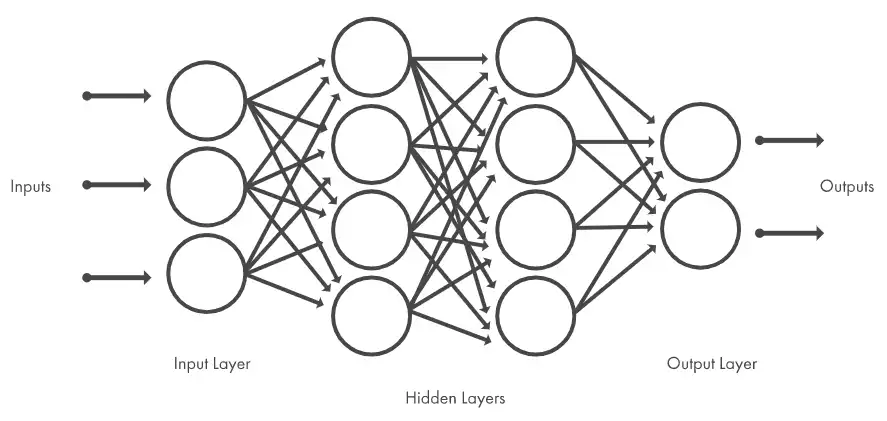
Fig 1 :Example of Artificial Neural Network [1]
Pros and Cons
Advantage
- Adoption of activation function, which enables any complex relationship between input and output
- Automate the process of feature engineering in the learning phase of minimizing the cost function through a proper learning algorithm such as Gradient Descent
Challenges
- The number of trainable parameters increases drastically with an increase in the size of the training data.
- Spatial features refer to the arrangement of the pixels in an image, but ANN loses the spatial features.
Other 2 types of neural networks
- Recurrent Neural Network (RNN)
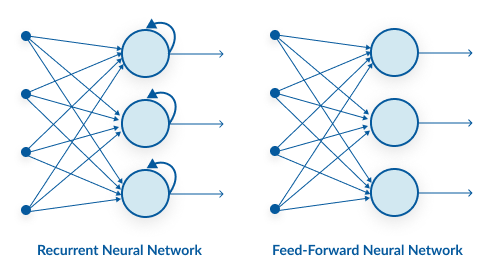 [2]
Fig 2 :Example of Recurrent Neural Network
RNN has a recurrent connection on the hidden state.
This ensures that sequential information is captured in the input data.
- Convolutional Neural Network (CNN)
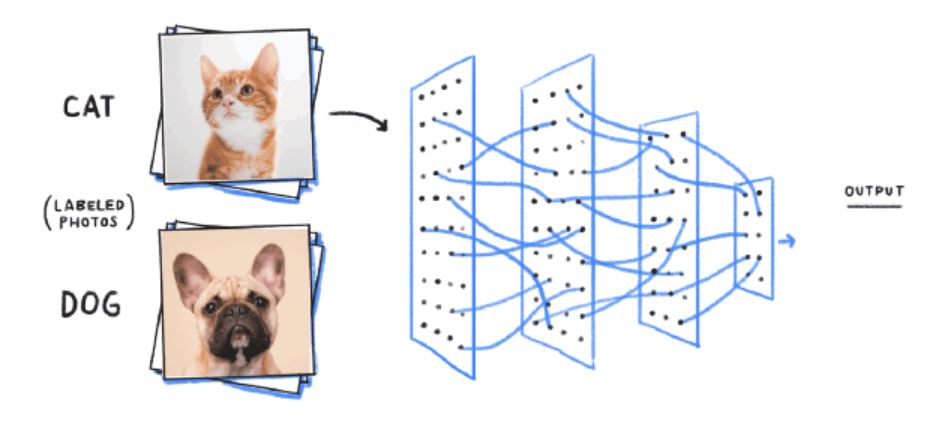 [2:1]
Fig 3 :Example of Convolutional Neural Network
CNN learns the filters automatically without mentioning it explicitly.
CNN captures the spatial features form an image.